Tuesday, January 30, 2018

Christmas in the Caribbean

Bogota

Christmas in Colombia was a fantastic culture experience. Colombian celebrate Christmas at midnight on Christmas Eve. Around 5:00 pm on Christmas Eve my host family and I joined around 15 relatives at one of their homes. The house was full of people, laughter, talking dancing and gifts. We ate the main meal at midnight and headed back to our house at around 2:00 am. 

Cartagena

The next morning, I boarded a plane for Cartagena at 8:00 am. Tired but excited, I headed to the Caribbean coast to enjoy one week of vacation with friends. I was looking forward to the warm Caribbean sun, beaches and water. This was not my first time spending Christmas in the Caribbean, but it was my first Christmas in Colombia and specifically, Cartagena. I was determined to make the most of it.

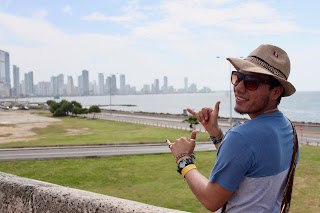
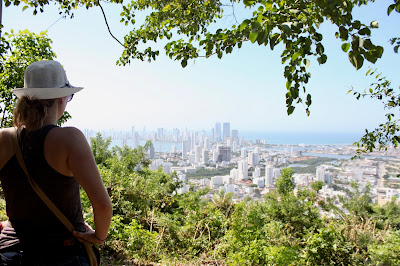
Albin was spending two years on the Colombian coast working with the Mennonite Central Committee in their SEED program. It was wonderful to see him and I enjoyed his two-day tour of the Cartagena, a beautiful colonial city. Many of the buildings in the in the center were brightly painted. We saw walls and cannons of the original “old city.” The city also over-looked the Caribbean sea, which made it even more spectacular. Here are some photos that I took while in Cartagena….
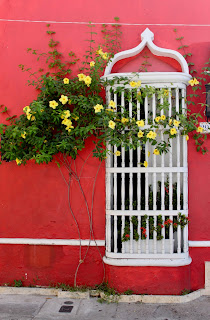


I couldn't get enough of the bright colors

My travel buddy, Albin


Over looking Cartagena


Libertad

Although Albin was familiar with Cartagena, his home was actually in a small village or “pueblo” called Libertad.  After two days visiting Cartagena, we took a bus from one of the main bus stations in Cartagena and drove to a small country town. From there we rode for 30 minutes on motorcycles to Libertad. Thankfully, I carried only a back pack that allowed me to simply hop on the “moto” and head on to my next adventure. 

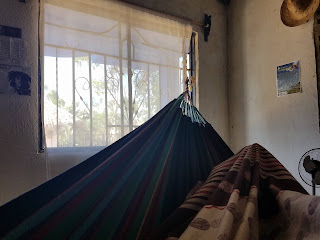
When we arrived, we spend the rest of the day relaxing in his home. In the evening, Albin introduced me to some of the people in the pueblo. At Albin’s house I took a “bucket bath” since he did not have running water. And for the first time in my life, I got to sleep in a real hammock! It took some time getting used to, but it was a fun experience.

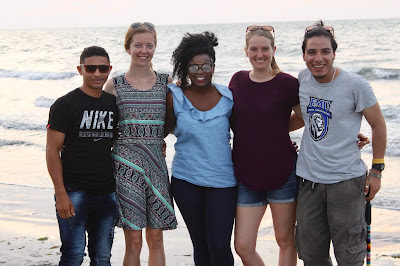
Over the next few days, other SEEDers that lived in the area visited us in Libertad (Lwendo and Leanna). We ate, played games, talked, visited the pueblo and went to the beach. Since Libertad is located about a 15-minute moto ride from the beach, we took several opportunities to enjoy the ocean and sun. The countryside was beautiful. The people of the coast, the culture, and some of the scenery reminded me a lot of Haiti. The people were loud, warm, and friendly. The ocean was blue, the sand was warm, and the buildings were bright and colorful. 
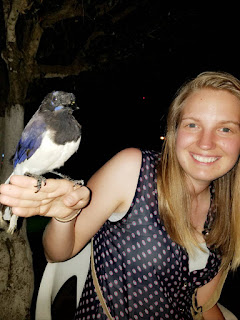
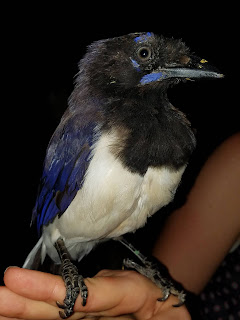
Holding a little Chau Chau bird
The "Chau Chau" bird


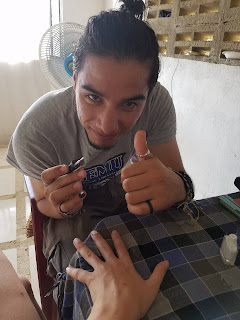
Albin painted my nails. Jejeje

Mornings in Libertad


Some of the SEEDers: Leanna, Lwendo, and Albin

Lwendo

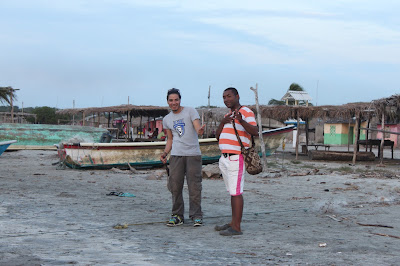
Albin and his friend form Libertad

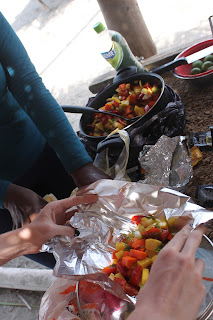
Preparing lunch on the beach


Cartagena Again

One of my goals for this trip was to go snorkeling. I had booked a tour to Isla del Rosario and Playa Blanca to snorkel. So I made sure to return to Cartagena a day earlier than my flight. It was a bit expensive but worth it. 

That night, New Year’s Eve I met up with my friend Easter, who is in the same program as I. She and her host family happened to be visiting Cartagena for a few days and agreed to let me spend the night with them at the apartment they were renting. It turned out to be a crazy night, so I was happy to get some rest before flying back to Bogota early the next morning.
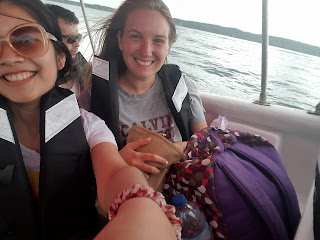
Made a new friend on the boat tour to the islands
Isla del Rosario: more or less, where we went snorkeling

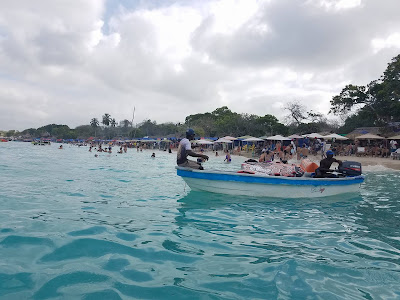
Playa Blanca


And this is what Cartagena looks like at the end of the day. 


Friday, January 5, 2018

Working with Mennonite World Conference

In my blog posts thus far, I have written about the people I have met, the places I’ve been, the food I’ve eaten, and the activities I’ve experienced, but I have not yet shared what I am actually doing in Colombia. And so in today’s blog, I’d like to explain what I hope is my contribution to the worldwide mission of Mennonite Central Committee (MCC).

I am working through MCC for one of its partners, the Mennonite World Conference (MWC). This nonprofit partner works with Anabaptist churches around the world. Although staff and volunteers work in many countries, the head quarters for MWC is here in Bogota. I work in the communications department. It is our goal to connect these churches together by sharing stories, events and activities. 

Our team consists of a diverse group of people from Colombia, the United States, Canada and France. There are three of us working in communications. My supervisor, Kristina is from Canada, but works here in Bogota. Another team member, Karla, works from her home in Winnipeg, Canada. As a communications team, we talk regularly through apps such as Slack (a messaging system for businesses) and Skype. Together we update “Info,” our monthly newsletter, “Courier,” our bi-yearly magazine, as well as collect stories, news and articles for the MWC website, Facebook, Twitter, and Instagram sites. 

A few of my co-workers out for a coffee break: (Left to right) Nelson, Anna, Kristina, and me
The focus of my work is to keep all our social media sites and web pages relevant and interesting. At times I also work with editing and sorting through our photo library. Our website and all social media apps are published in three languages: English, French, and Spanish. 

I am thankful for the opportunity to learn and grow in this new role. After working at a bakery for about nine months, it took some adjustment to sit at a desk for most of the day. However, I appreciate my colleagues and the work that MCC is doing around the world. I get to witness God’s work in His church and share that with others through various media venues. It is rewarding knowing I am bringing members of the MWC church together and strengthening those relationships.

Click on the image to view our "Year Review" video.
Check out a few of the social media sites that I update and if you have any questions, send me a note to my email address: taressa.vandam@gmail.com
MWC’s website: https://www.mwc-cmm.org


Read about MWC’s mission here: https://www.mwc-cmm.org/content/what-we-do 

Sunday, October 29, 2017

Chucula

The indigenous people of Columbia used to say, "Coco is the food of the gods." 


A few weekends ago I had the privilege to go to an event called "La Paztelería del Meg." pastelería means bakery, and paz mean peace. This peace event was hosted by one of the Mennonite Churches in Colombia. As we talked about conflicts in Colombia while we made Chucula. Chucula is a drink found only in Colombia. It contains coco which gives it a chocolate flavor, various spices, and grains. Growing coco has been a way to bring peace in Colombia. Some producers have replaced cocaine with coco thereby promoting peace. 

During this peace event, we took part in producing Chucula. Ingredients include: 
  • Cain Sugar (Panela) 
  • Coco (unsweetened and natural) 
  • Corn 
  • Oats 
  • Lentils 
  • Chickpeas 
  • Cinnamon 
  • Cloves

Some of the grains used


First, grind up all the grains and spices into powder. Unfortunately, the spices and grains were already ground when we arrived so I was not able to determine the quantities. 

Second, melt the panela or cane sugar and add a little bit of water until it becomes dense and almost paste like. 

Third, mix the melted cane sugar and ground-up grains and spices with your hands. The mixture becomes something like wet sand. Shape them into golf-size balls. 

The cain sugar melted down and mixed through


Fourth, let the balls of chucula sit for 15 days, in order to dry. 

Finally, after the fifteen days, it is ready to be made into a drink. Put one ball into a pot with milk and brink it to a boil. Continue to boil and mix until the grains become soft. The flavor is delicious and holds the taste of hot chocolate, aqua panela, and spices. The grains add a hardiness without tasting the grains. Although it is not a drink typical to Bogota, you can still find and buy packets of the dried Chucula ready to boil and enjoy. 


Bread and Chucula
The final product


Sunday, September 24, 2017

The Full House

So far, my time in Colombia has flown by. I can’t believe that it’s been a little bit over a month since I moved to Bogotá! The first two weeks in Colombia really enhanced my experience. It was all about learning, as in where to buy food, what Spanish words and phrases to say, and how to get around to the office and such. It was also a friendship experience. I made great friends with my house mates who were all working with Mennonite Central Committee: SALT (Serving And Learning Together), YAMEN (The Young Anabaptist Mennonite Exchange Network), and SEED (not sure what the acronym stands for).

It was an orientation time for the SALT and YAMEN participants since we were beginning our one year of service. The SEEDers had already been in Colombia for a little more than a year and were all in Bogotá for meetings. This meant that there were nine of us in one house, with one bathroom and three bedrooms. Living in such a small place with so many people had its complications, but overall it was fun. Since most of us were from different countries, we shared cultural meals and ate altogether for breakfast and dinner. 

A picture of most of us eating dinner together around our small table. Photo: Albin

Here were some of my housemates: 


Easter


  • YAMENer from India serving in La Mesa, Colombia, teaching English.
  • Most popular quotes: “I will kill you,” “Oh what to do?” 
  • Known for performing open heart surgery (as a nurse in India) and delivering babies. 
  • Not afraid to talk to anyone (in Colombia) in English, and when they don't understand calls Sarahi over to help (she doesn't alway understand Easter either). 
  • The main cook in the house. 
  • Puts “aji” (a Colombian Hot Sauce) on all the Colombian foods. 
  • Also known for performing the “snake dance” and taking selfies with EVERYTHING. 


Easter and Julian performing the "Snake Dance" with a local street artist


Sarahi


  • YAMENer from Mexico serving in Ecuador, working with children.
  • Because her first language is Spanish she laughs at everything we say in Spanish. 
  • Very much a part of our store and shopping adventures 
  • Our translator when we didn't know how to say something while also trying to understand our English. 
  • Brought Mexican salsas in her suitcase to make up for the lack of spicy food in Colombia. 
  • Most popular quote: “video, video” in order to capture all the things we say and do. 


Kiernan


  • SALTer from the United States serving in Quito, Ecuador working with refugees. 
  • Known for having the hardest name to pronounce.
  • Really devoted to learning Spanish (his girlfriend is Venezuelan). 
  • Was our bridge translator to Sarahi and the rest of us.
  • Known also for making sure everyone left the house on time.


Santos


  • YAMENer from Mozambique serving in Bogotá, Colombia, working with youth and children.
  • First and main language is Portuguese; the rest of us spoke a mixture of Spanish and English with him. 
  • Known for his descriptive stories and parables 
  • A very strong speaker. 
  • Would make Sarahi translate his Portuguese in to Spanish, and Kiernan translate Sarahi’s Spanish into English. (Often this did not work, but we tried). 
Santos speaking Portuguese, trying to get Sarahi to translate into Spanish, and Sarahi not understanding. 


Julian


  • YAMENer from Indonesia serving in Cali, Colombia, teaching English 
  • Also determined to learn Spanish and has a journal for all the Spanish he learns every day: listed “Day 1 of Spanish”, “Day 2 of Spanish”, and so on…
  • Most popular quotes: “no sé, no sé” and “vamos chicos” 
  • Known for making jokes about potatoes and Pope Francis: “papa? Papa Francisco?” 
  • Would say "no sé" to anything that he didn't understand or know how to say. 
  • Determined to learn to dance Salsa (he is working in the right city to learn).
  • Also know for live streaming our meals on Instagram. 


Josiel


  • SEEDer from Colombia serving in Soacha, Colombia.
  • Quote: “She is Pretty/Ugly lady” referring usually to Albin. 
  • Loves his nephew. 
  • Would practice his English with me and I would practice Spanish with him


Albin


  • SEEDer from Colombia serving near/in Cali, Colombia 
  • Most heard quote from him: “Shut-up Donkey” from Shrek. 
  • Known for making dream catchers and bracelets. 
  • At times would check/grade my Spanish homework before I gave it to my teacher. 
  • You could find him drinking “Mate” out of a cow horn. 


Daniel 

  • SEEDer from New Zealand and Canada, serving in Choco Colombia. 
  • Most used saying: “At the end of the day…”
  • Known for being philosophical and having deep conversations and thoughts.
  • Also served as one of our other translators. 


Although we are now each in our separate locations, I’m glad for the time that I was able to spend with and build relationship with these incredible in Colombia. 


Thursday, September 7, 2017

Chocolate con Queso

Now that I have lived in Colombia for about three weeks, I decided to put together a list of things that I have learned about Colombia since I have been here.  

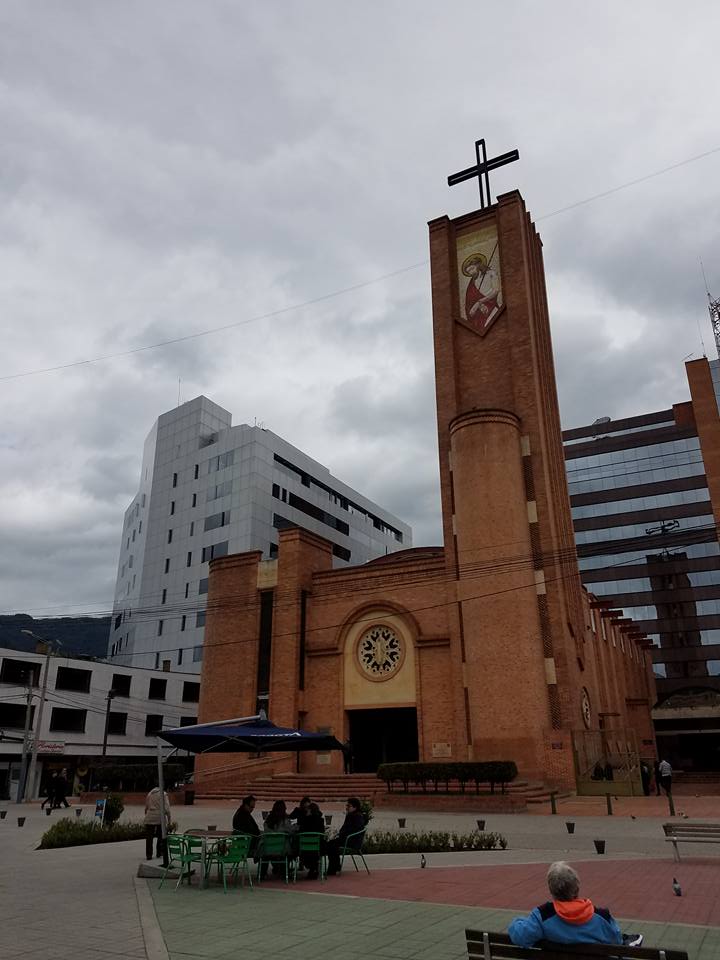
  • Bogotá is the Capital city (also the city I live in) and contains about 8 million people which is just a bit smaller compared to NYC (used google to compare). 
The City of Bogotá
  • Bogotá is located just a few degrees above the equator and is about 2,640 m (8,660 ft) above sea level, that is about 1030 m above Denver Colorado. This gives Bogotá a cool, Fall like weather year round (according to google). 
Elevation of Monserrate (Look out over the city of Bogotá)

On top of Monserrate

  • The main religion in Catholicism, and when Pope Francis (Papa Francisco) came it was declared a holiday. 

  • The main language in Colombia is Spanish (I’m sure you already knew that) although there are a few indigenous people who still speak their own local/tribal languages. 
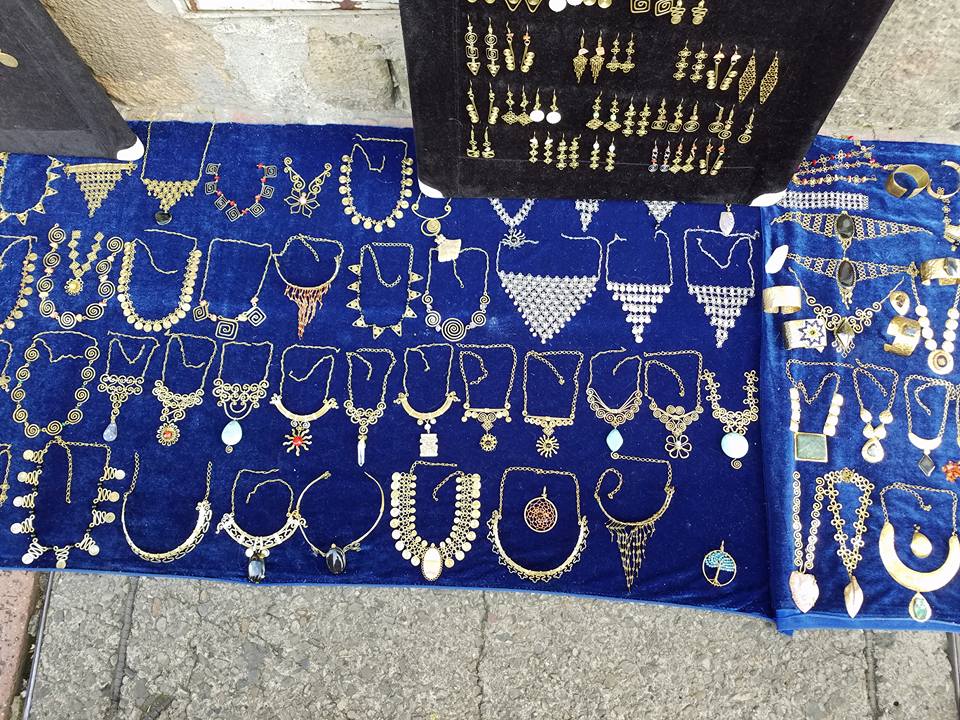
Some tribal style jewelry
  • The main public transportation system in Bogotá is by bus, the Trans Millennial is the main bus line and takes you across the city fast. This is also how I get to work every day. 
  • Colombia has been in a civil war for over 50 years (some argue more, and some argue less, depends on who you talk to).
  • Young Colombian guys at the age of 18 must join the military, otherwise they have to pay a high fee to get out of it. 
  • Lunch is the main meal of the day, which usually consists of two or three main carbs (rice, potato, yams, plantains, or yucca root for example). And can also include soup, a meat, a salad, juice, and maybe a desert. 
Photo of a fried Plantain with salad, chips and cheese on it. Not a typical lunch, more of a fast food thing.

More traditional foods found in the tourist areas. 

  • For dinner, many Colombians will eat something small, like a snack. At my host family’s house we will have hot chocolate and arepas, plain or with cheese (not really sure what they are are, but they are good).
  • Many Colombians are not a fan of spicy food. Although there is this salsa called “Aji,” that adds a little bit of spice and a little bit more flavor. I really like it!
  • It is common for people in Colombia to put cheese in their Hot Chocolate (Chocolate con Queso). So when I come back to the United States and start putting cheese in my hot chocolate, you would know why. 
  • In Colombia if you want black coffee you need to ask for café tinto or just tinto, and if you want café con leche (coffee with milk), you ask for café. 
Café Bon Bon

  • Bogotá is a very artsy place with a lot of graffiti and street art. 


  • Most people in Colombia do not drink the “good Colombian coffee” most North Americans know of since the good coffee is shipped to North America. 
  • Lastly, never tell a Colombian that you are from “America” or that you are “American.” You will be told that the Americas also include North, South and Central which also includes Colombians making them also American. 

So far I have really enjoyed my time here in getting to know Colombia.