Friday, March 23, 2018

The Town of Guatavita

After getting a tour and a history of the lake, my friends Diana, Falipe and I took a walk around the city of Guatavita. This original, ancient city was eventually turned into a reservoir about 50 years. Now, the reservoir is a main source of water for the region. The new city of Guatavita is located only about a 20-minute drive from Laguna de Guatavita. It is a touristy town with many novelty shops and activities that you can do around that area and on the lake/reservoir. Many of the restaurants offer rabbit and lamb entrees, and many of the shops sell products made out of wool (scarfs, and shawls) and rabbit fur (gloves, and coin purses). The new town of Guatavita also has a small museum, displaying the history of the town and the indigenous Muisca Indians of the area.

Here are some photos: 


To read more about my Guatavita trip and how it is related to the Legend of El Dorado click here.

Sunday, March 18, 2018

Laguna de Guatavita and the Legend of El Dorado

Last weekend I had to privilege of going to Laguna de Guatavita where the legend of El Dorado began. This lake was and still is sacred to the Muisca people (an indigenous people in Colombia). It is said that many years ago, as part of a religious ceremony, the Muisca tribal leader would cover himself in gold dust. Then he would get on a raft along with the tribal priests and gifts of gold. They would push out into the middle of the lake. They would offer their gifts to the gods by throwing them into the lake. Then the chief himself would jump into the lake allowing the water to clean off all the gold dust. 

Years later, word got out that this lake was filled with gold. The Spaniards arrived and attempted to drain the lake. This was not successful, but they did manage to remove some pieces of gold. When other Europeans heard that Spain found gold in the Laguna de Guatavita, the rumor of this Empire called El Dorado came about. It is important to note that the Muisca people did not see gold the same way as the Europeans in the sense of wealth but rather it was something that connected them to the spirits and gods. Other Europeans attempted to drain the lake, and although they never succeeded, the lake has lost its depth. It once reached the depth of about 70 meters. Today the lake is around 40 meters deep. 

Europeans removed most of the gold from Laguna de Guatavita. However, since the Muisca performed the gold gift-giving ritual for hundreds of years, it is possible there is still gold inbedded in some of the clay and rocks.

The origin of Laguna de Guatavita is a mystery. There have been several theories as to how it was created. Some believe that it was once a volcano. Others believe it was formed by a meteorite impact or from a limestone sinkhole. The most recent findings lead to a possible salt sinkhole as the birth of the lake. The land surrounding the lake is salty, and there are many salt mines and caves found in the area. 

Here are some photos: 


My Friend and Spanish Teacher Diana

The Climb

The View


Laguna de Guatavita

My Adventure Companions: Falipe and Diana


Another one...

And the journey continues

This golden artifact was found in the lake of Guatavita (photos above). It is a replicant of what the of the tribal leader and the priests on a raft would have looked like going out in the middle of the lake to make an offering. This artifact is worth more than the whole "Gold Museum" (where it is being displayed) because it tells us a lot about history of the people and how this ritual of offering gold in the middle of the lake would have looked like.


Please note that the information I got was from our tour guide. Also Diana and Falipe filled me in on the information that I could not understand or missed (the tour was in Spanish). I did some extra research but could not find much more than what the tour guide said. Therefore, if I missed or messed up on any information or history, my apologies, but please feel free to correct me by leaving a message below. 

Tuesday, January 30, 2018

Christmas in the Caribbean

Bogota

Christmas in Colombia was a fantastic culture experience. Colombian celebrate Christmas at midnight on Christmas Eve. Around 5:00 pm on Christmas Eve my host family and I joined around 15 relatives at one of their homes. The house was full of people, laughter, talking dancing and gifts. We ate the main meal at midnight and headed back to our house at around 2:00 am. 

Cartagena

The next morning, I boarded a plane for Cartagena at 8:00 am. Tired but excited, I headed to the Caribbean coast to enjoy one week of vacation with friends. I was looking forward to the warm Caribbean sun, beaches and water. This was not my first time spending Christmas in the Caribbean, but it was my first Christmas in Colombia and specifically, Cartagena. I was determined to make the most of it.

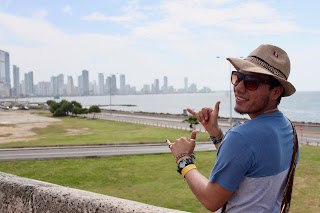
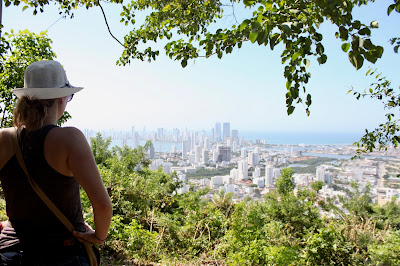
Albin was spending two years on the Colombian coast working with the Mennonite Central Committee in their SEED program. It was wonderful to see him and I enjoyed his two-day tour of the Cartagena, a beautiful colonial city. Many of the buildings in the in the center were brightly painted. We saw walls and cannons of the original “old city.” The city also over-looked the Caribbean sea, which made it even more spectacular. Here are some photos that I took while in Cartagena….
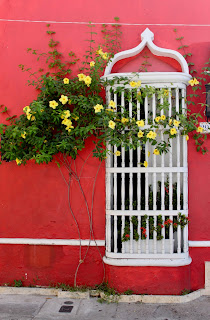


I couldn't get enough of the bright colors

My travel buddy, Albin


Over looking Cartagena


Libertad

Although Albin was familiar with Cartagena, his home was actually in a small village or “pueblo” called Libertad.  After two days visiting Cartagena, we took a bus from one of the main bus stations in Cartagena and drove to a small country town. From there we rode for 30 minutes on motorcycles to Libertad. Thankfully, I carried only a back pack that allowed me to simply hop on the “moto” and head on to my next adventure. 

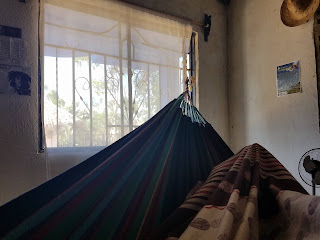
When we arrived, we spend the rest of the day relaxing in his home. In the evening, Albin introduced me to some of the people in the pueblo. At Albin’s house I took a “bucket bath” since he did not have running water. And for the first time in my life, I got to sleep in a real hammock! It took some time getting used to, but it was a fun experience.

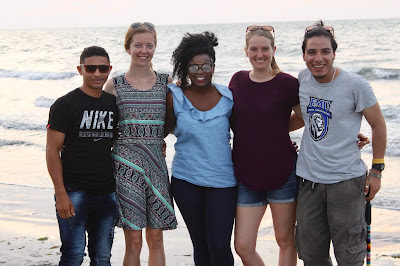
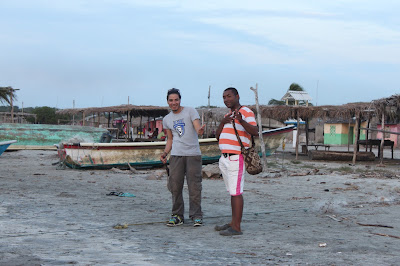
Over the next few days, other SEEDers that lived in the area visited us in Libertad (Lwendo and Leanna). We ate, played games, talked, visited the pueblo and went to the beach. Since Libertad is located about a 15-minute moto ride from the beach, we took several opportunities to enjoy the ocean and sun. The countryside was beautiful. The people of the coast, the culture, and some of the scenery reminded me a lot of Haiti. The people were loud, warm, and friendly. The ocean was blue, the sand was warm, and the buildings were bright and colorful. 
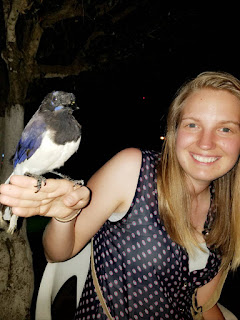
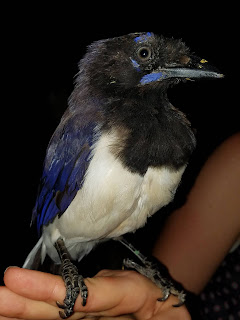
Holding a little Chau Chau bird
The "Chau Chau" bird


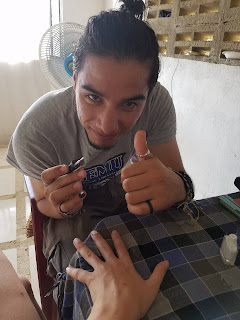
Albin painted my nails. Jejeje

Mornings in Libertad


Some of the SEEDers: Leanna, Lwendo, and Albin

Lwendo

Albin and his friend form Libertad

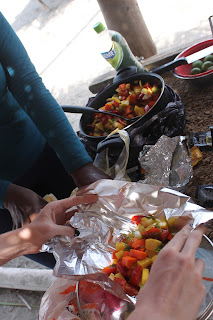
Preparing lunch on the beach


Cartagena Again

One of my goals for this trip was to go snorkeling. I had booked a tour to Isla del Rosario and Playa Blanca to snorkel. So I made sure to return to Cartagena a day earlier than my flight. It was a bit expensive but worth it. 

That night, New Year’s Eve I met up with my friend Easter, who is in the same program as I. She and her host family happened to be visiting Cartagena for a few days and agreed to let me spend the night with them at the apartment they were renting. It turned out to be a crazy night, so I was happy to get some rest before flying back to Bogota early the next morning.
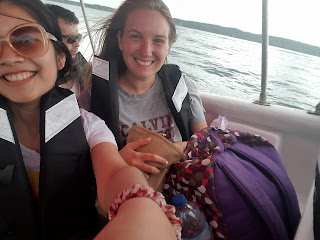
Made a new friend on the boat tour to the islands
Isla del Rosario: more or less, where we went snorkeling

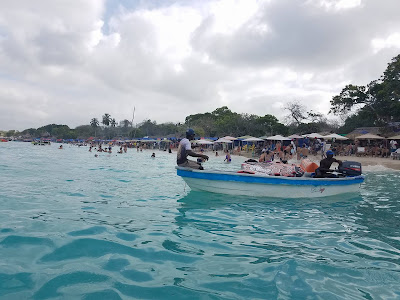
Playa Blanca


And this is what Cartagena looks like at the end of the day.